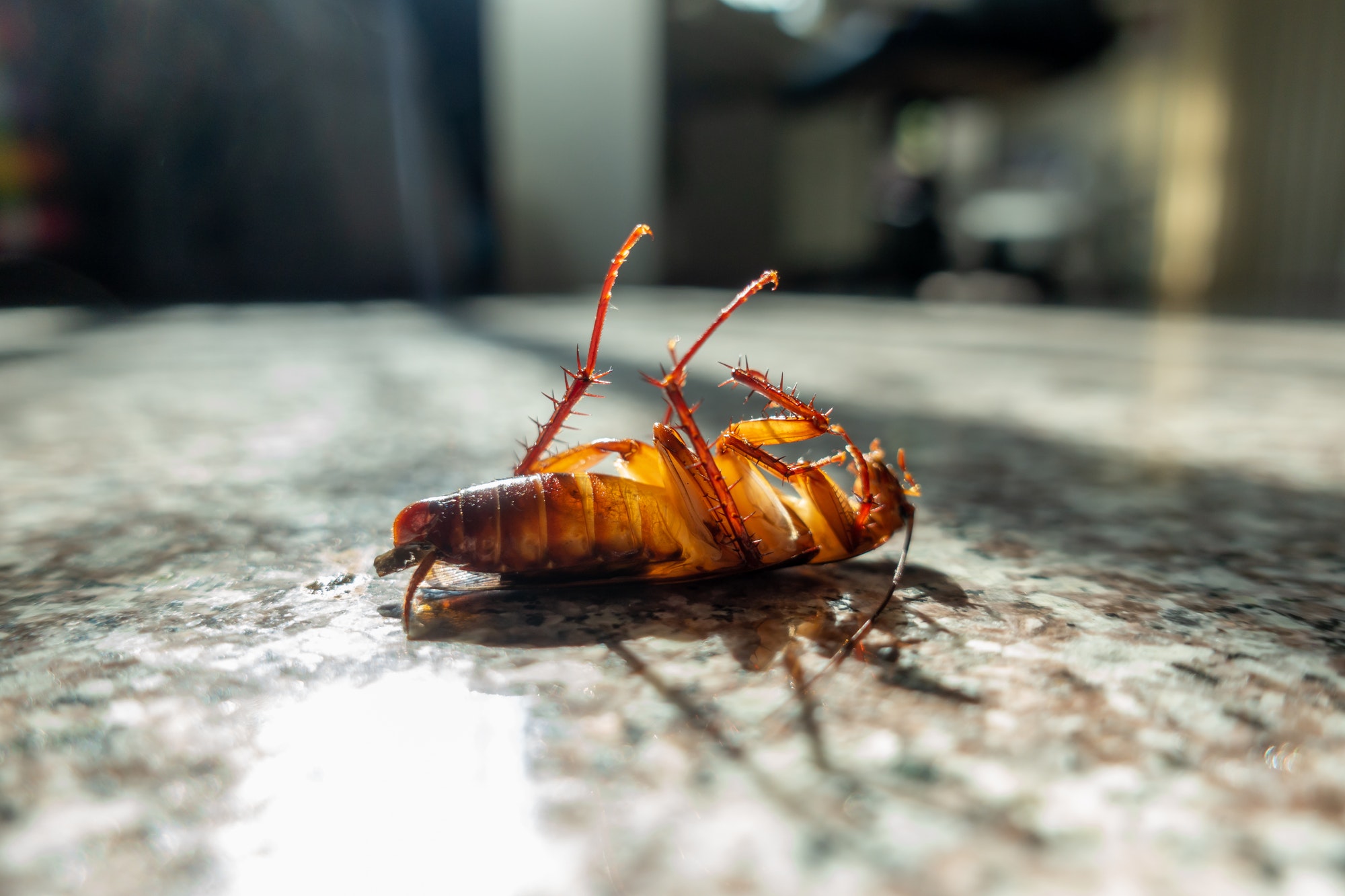
Sometimes, but you can't count on it. A car parked in full summer sun can get hot enough to kill some of the roaches that are out in the open. The trouble is that a car doesn't heat evenly, roaches don't hang out in the hottest spots, and the heat fades every evening. If you're hoping an August afternoon in a grocery store parking lot will do the job for you, the odds aren't great.
Here's what actually happens inside a hot car, why roaches tend to ride it out, and what does work when one strolls across your dashboard at a red light.
How hot does a parked car actually get?
Hotter than most of us would guess, and not the same everywhere. In a study by Arizona State University and UC San Diego, researchers parked cars in the sun on summer days in Tempe, Arizona, with temperatures in the 100s. After an hour, the cabin air averaged 116°F. Dashboards averaged 157°F, steering wheels 127°F and seats 123°F. Cars parked in the shade stayed much cooler: cabin air closer to 100°F, dashboards around 118°F and seats around 105°F.
Two things jump out. First, there was more than a 30-degree difference between the dashboard and the seats in the same car. Second, those were Arizona desert days. Nashville's normal July high is about 91°F, so a typical Middle Tennessee summer day starts from a lower baseline, and shade brings it down further.
Why the heat doesn't reach every roach
Roaches don't sunbathe on the dashboard. German cockroaches, the small species most likely to set up house in a car, look for dark shelter near food and moisture, according to Texas A&M's urban entomology program. In a car, that means places like:
- the seat rails and the gap under the seats
- the crevice between the seats and the center console
- door pockets, and cupholders with a little dried soda in them
- the glove box and console bin
- the trunk liner and spare-tire well
Those spots are shaded and tucked away compared with the dashboard, and a roach that gets uncomfortable can move. Then the sun goes down and the whole car cools off overnight.
The eggs are the other catch. A female German cockroach carries her egg case with her until just before it hatches, and a typical case holds 30 to 40 eggs, according to the University of Florida. So the eggs are tucked into the same protected hiding spots she is. Heat that knocks back a few adults but misses one egg case leaves you with a fresh batch a few weeks later.
Heat can kill insects when it's done right. The catch is "right": the whole space has to reach a lethal temperature and stay there long enough, hard-to-heat corners included. One sunny side of a parked car for an afternoon isn't that.
Should you try parking in the sun anyway?
It won't hurt. Leaving the windows up in a sunny spot may finish off a few exposed roaches, and it costs nothing. Just treat it as a small bonus, not the plan.
What you shouldn't do is try to make the car hotter or fill it with bug spray:
- Don't leave a space heater running in the car. The Consumer Product Safety Commission says to keep space heaters at least three feet from anything that can burn and never to leave one running unattended. A car interior is pretty much all "things that can burn."
- Don't set off a bug bomb in the car. The EPA warns that total release foggers shouldn't be used in small, enclosed spaces. Their propellants are typically flammable, and misuse can cause a fire or explosion.
What actually works for roaches in a car
The good news: a car is a small space, and you can do most of this in an afternoon.
1. Figure out where they came from
Roaches usually ride into cars as hitchhikers, in grocery bags, boxes, backpacks, secondhand finds or a bag of takeout. Texas A&M notes that German cockroaches often reach new places hidden in groceries or luggage. If you're seeing roaches at home too, the car may be the symptom and the house the source. Our article on cockroaches infesting your car covers the usual ways they get in.
2. Empty it out completely
Take out everything that isn't bolted down: trash, fast-food bags, drink cups, the emergency granola bars, the kids' snack stash, cardboard boxes and reusable shopping bags. Pull the floor mats and shake or wash them. Roaches don't need a feast; crumbs and sticky spills are enough to keep them interested.
3. Vacuum like you mean it
Use a crevice tool on the seat rails, under and between the seats, around the console, in door pockets and cupholders, and in the trunk and spare-tire well. Along with the food, you're picking up droppings, shed skins and any egg cases you can reach. Wipe sticky cupholders and spills while you're in there. When you're done, empty the canister or bag outside into a bag you can seal and throw away.
4. Put out a few sticky traps
Sticky traps won't wipe out a population, but they tell you whether roaches are still around and where. Tuck a couple under the front seats and one in the trunk, out of reach of kids and pets, and check them after a week. Empty traps after a thorough cleanup is a good sign. Fresh catches under the same seat tell you where to focus.
5. Be careful with baits and sprays
Before you use any insecticide in a car, read the label and follow it, including where the product is allowed to be used. Keep baits out of reach of kids and pets, and don't spray the surfaces you touch or eat near.
6. Keep them from coming back
- Don't leave food or open drinks in the car overnight.
- Look over grocery bags, boxes and secondhand items before they go in the car, especially if they came from somewhere with roaches.
- Don't use the trunk as long-term storage for cardboard boxes.
When it's time to get help
If you've cleaned the car out and the sticky traps keep catching roaches, or you're seeing them in the kitchen or bathroom too, the problem probably isn't really the car. Small brown roaches with two dark stripes on the shield behind the head are German cockroaches (adults are only about 3/8 to 9/16 of an inch long), and they're a home problem first. Our guide on how to identify German cockroaches can help you confirm what you're seeing.
If they keep coming back after all that, you don't have to keep guessing. Thrive offers a free inspection and can help you track down where the roaches are coming from. Start with our cockroach control service, review pest control in Mt. Juliet if that is your service area, or get in touch.
Need help beyond the article?
If the signs around your property match what you are reading, you can review the related service or call Thrive with the details you have.