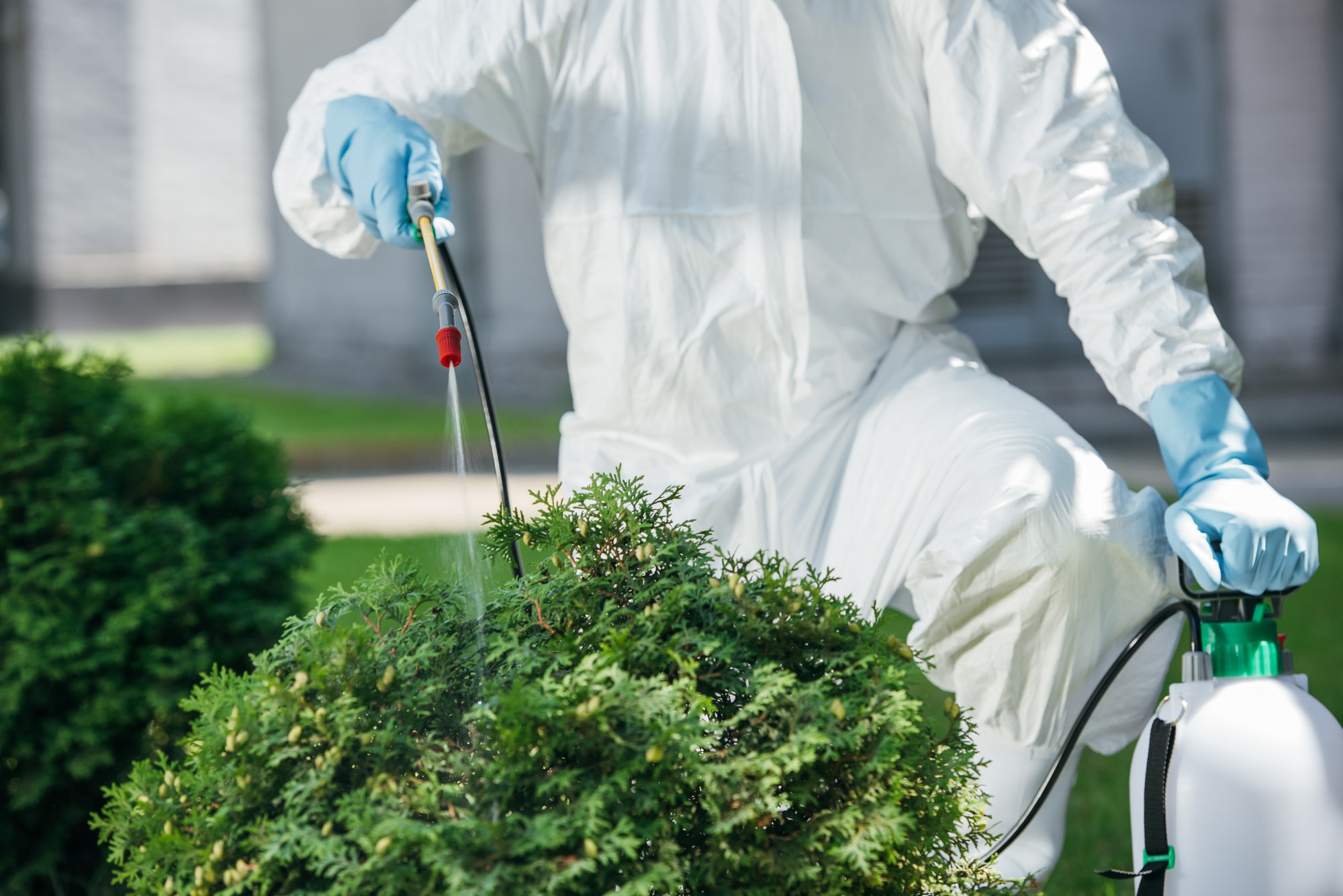
Mostly in the places pests hide and travel, not across your whole house. A careful pest control visit focuses on cracks, crevices, wall edges, the spaces under and behind sinks and appliances, and the places where pests get in from outside. Outside, that usually means the foundation and the strip of ground right next to it. Wide-open floors, countertops, dishes and the middle of the living room aren't the target.
Exactly where a technician treats depends on the pest, what the inspection turns up and what the product label allows. Here's what to expect, how to get ready, and what's worth asking before anyone starts.
Why pest control isn't a whole-room spray
Most household pests spend their day tucked into tight, protected spots and come out to forage. Treating where they actually hide works better, and it keeps product away from the surfaces your family touches. Penn State Extension's guide to controlling roaches puts it plainly when it warns against broad spraying: you can't control where the chemicals go, and the exposure risk is high. The same guide describes gel bait placed in small dabs along cupboard and wall edges and in cracks and crevices.
The U.S. EPA's pest control do's and don'ts points homeowners the same way. It suggests asking a pest control company to find and correct the source of the problem before applying pesticides, and to use baits and crack-and-crevice treatments when feasible. So a good visit may involve less spraying than you'd picture, and more looking.
Where a technician may treat inside
These are the spots that commonly come up, depending on what you're dealing with:
- Kitchen: under the sink where pipes pass through the wall, the gaps beside and behind the fridge, stove and dishwasher, and the edges of cabinets.
- Bathrooms and laundry: plumbing openings, the edges behind the toilet, and the space around the washer and water heater.
- Wall edges: cracks along baseboards and trim, especially where you've actually seen activity.
- Entry points: door thresholds, window frames and gaps where pipes, wires or cables come through a wall.
- Garage, basement or crawl space: the places where pests slip in from outside before they reach the living areas.
Some visits lean more on bait than spray. With roaches or ants, for example, the goal is often a bait the pests carry back to where they hide, which is why the placement looks small and tucked away rather than dramatic.
Where a technician may treat outside
For pests that wander in from the yard, the outside of the house is often where the real work happens. NC State Extension's earwig guidance describes a perimeter treatment as the lower 18 to 24 inches of the foundation wall and possibly a 3- to 6-foot band of ground next to it. Technicians also pay attention to door and window frames, weep holes, vents, utility openings and the spots where mulch, leaf litter or shrubs touch the house.
Yard pests are a different job. Mosquitoes and ticks are about resting spots, shaded vegetation and standing water around the property, not the inside of the house.
What usually stays untreated
Food, dishes, and surfaces where you prepare food shouldn't be part of a general treatment, and EPA advises removing food and dishes from areas being treated. The same goes for pet bowls, toys and aquariums. If the plan involves your bed, furniture or belongings, that's a specialized situation, like bed bugs, with its own preparation steps. Your technician should explain it before it happens.
If you live in an apartment
The same logic applies, with a few wrinkles. Pests don't respect unit lines. They travel along plumbing and wall voids, so a treatment in one unit may not settle a problem that starts next door. A few things help:
- Tell your landlord or property manager what you're seeing, where and when, so they can decide whether neighboring units need a look.
- Ask what kind of treatment is planned for your unit and what you're expected to do to prepare.
- Write down the rooms where you see the most activity. It helps the technician focus instead of guessing.
How to get ready for a visit
The EPA's tips for choosing a pest control service list practical prep: if you're asked to clear items off the floor, empty kitchen cabinets or take pets out, get that done before the technician arrives. Aquariums should be moved out of the area or covered with heavy plastic with the air pump turned off. Beyond that:
- Put away food, dishes and pet bowls in the rooms being treated.
- Clear enough space under the sinks and along the walls that the technician can reach the cracks and edges.
- Have your notes ready: where you've seen the pests, what time of day, and anything you've already tried.
After the treatment
The biggest rule is simple: EPA says not to let children or pets into treated areas until the spray has dried. EPA also advises ventilating the area well after pesticide use. Ask your technician how long to wait for the specific product and area, and follow what the label says. Under federal law, a pesticide has to be used the way its label says, so the label isn't just a suggestion.
Questions worth asking before anyone treats
- What pest did you find, and where is it coming from?
- Where exactly will you treat, inside and out, and why there?
- Will you use baits or crack-and-crevice treatments where they fit?
- What's the product name and its EPA registration number? A reliable company can give you the label and safety data sheet.
- Is the person doing the work a certified or licensed applicator? EPA notes that licenses can be checked with your state department of agriculture.
- What should I change around the house so this doesn't keep happening?
If you have pets, our article on pet-safe pest control techniques covers more of the questions worth raising.
Want someone to walk the house with you?
If you're trying to figure out what a visit would actually involve for your home, Thrive's residential pest control starts with a free inspection. Our licensed and certified technicians can show you where they'd treat and why, whether you're in Nashville or near Murfreesboro. You can reach us here when you're ready.
Need Pest Control Help?
Call Thrive with the pest, location, and pattern you have noticed. You do not need a perfect identification first.