Yellow jackets may be nesting in a wall when you see fast, repeated traffic into the same siding gap, soffit opening, vent edge, or utility penetration. One insect disappearing behind the siding is not proof. A steady in-and-out flight path at one opening is the clue worth taking seriously.
Give that opening room. Do not plug it, spray blindly into it, tap the wall, or put your ear against the drywall. The nest may sit some distance from the entrance, and disturbing or sealing an active route can increase the chance of yellow jackets turning up somewhere else—including indoors.
What are the clearest signs of a wall nest?
The most useful evidence is a repeatable pattern, not a single buzzing insect. Watch from indoors through a closed window or from another protected spot if you can do that without crossing the flight path.
- Repeat traffic: multiple insects use one small exterior opening again and again.
- A direct flight path: yellow jackets arrive quickly, disappear into the gap, and leave from the same place.
- Activity in one wall area: faint buzzing or scratching seems concentrated in a consistent spot, especially when outside traffic is active.
- Indoor sightings near that wall: more than one yellow jacket appears in a nearby room without an obvious open door or window.
- No visible paper nest: the insects are entering a cavity rather than landing on an exposed comb or enclosed aerial nest.
None of those clues identifies the nest with certainty by itself. Other wasps and bees can use building cavities, and a lone insect indoors may simply have flown through an open door. The combination of repeated exterior traffic and activity tied to the same wall is what makes an inspection worthwhile.
Where do yellow jackets enter a house?
Yellow jackets can use protected cavities in buildings, including attics and wall voids. The University of Minnesota Extension notes that they may nest in wall voids as well as underground and in other sheltered spaces.
From the outside, the entrance may be at:
- A gap behind siding or trim
- A soffit, fascia, or roofline opening
- A utility, pipe, cable, or hose penetration
- A loose vent edge or damaged screen
- A crack where masonry, framing, or another material meets
- An opening around a porch, deck ledger, or attached structure
The visible opening is not necessarily right beside the nest. Yellow jackets can travel through a cavity before reaching the colony. That is one reason poking into the gap or opening the wall yourself is a poor detective strategy.
Does buzzing inside a wall prove there is a yellow jacket nest?
No. Buildings make plenty of noises, and bees, paper wasps, rodents, plumbing, and moving materials can all create sounds in a wall. Buzzing becomes more meaningful when it lines up with repeated yellow jacket traffic through a nearby exterior opening.
If you hear activity but cannot see an exterior route, note the room, wall, time of day, and how often it happens. Do not cut drywall to investigate. A clear description and a zoomed exterior photo are more useful—and much less exciting in the bad way—than suddenly opening the nest cavity into the room.
Why should you not seal the entrance first?
Sealing an active entrance does not remove the nest. It blocks the route the workers were using. University of Kentucky Extension specifically warns against sealing a yellow jacket entrance behind exterior siding because the insects may chew inward and emerge inside the building.
Leave the opening visible until the nest has been assessed and any needed control is complete. Permanent exclusion can make sense afterward, once activity is gone and the repair will not trap insects in the structure. Treatment and building repair are separate steps; doing them backward can turn a contained exterior problem into an indoor one.
What can you do safely while you wait?
- Keep people and pets away. Reroute foot traffic, play, mowing, and deliveries around the opening.
- Mark the area from a distance. A piece of tape on an inside window or a written note is better than walking up to the hole.
- Record the pattern. Note the opening, approximate height, nearby door or window, and time activity is strongest.
- Use zoom for photos. Stay out of the flight path and skip the ladder.
- Close nearby interior windows. Keep screens in place and close the room door if insects are appearing indoors.
- Share allergy and access concerns when scheduling. That information matters to the safety plan.
Do not flood the cavity, spray household products into electrical or wall openings, run a shop vacuum at the entrance, or improvise a treatment from a ladder. UC IPM's yellowjacket guidance notes that cavity nests are inaccessible and that wasps defend disturbed nests. This is a case where creating more access is not a useful DIY win.
Could the insects be bees or another wasp?
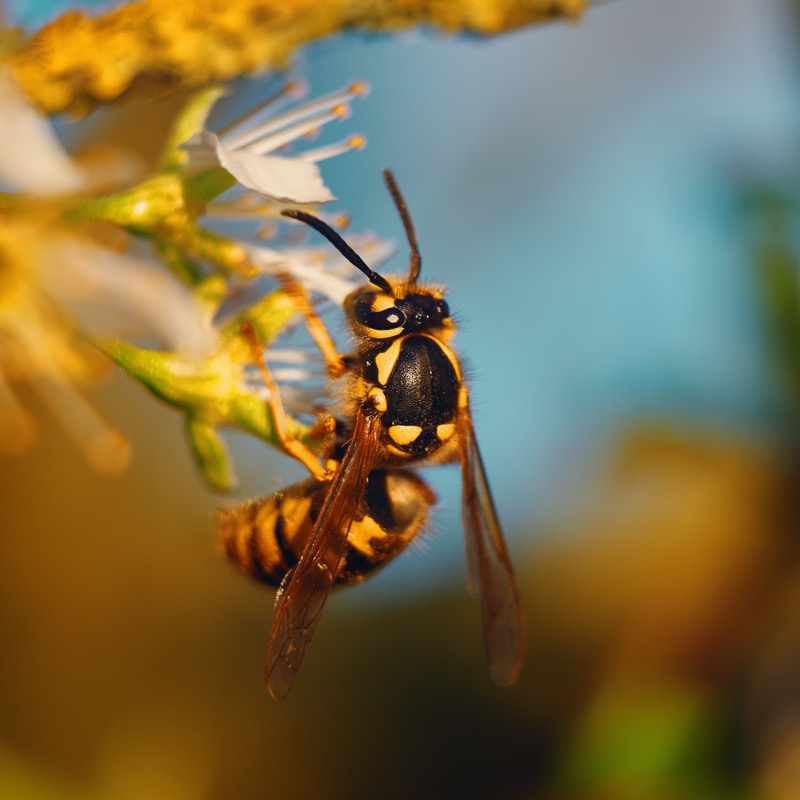
Yes. Yellow jackets are compact, smooth-bodied wasps with black-and-yellow markings, but color alone is not enough for a reliable identification. Paper wasps tend to have slimmer bodies and dangling legs, while honey bees are usually hairier. You may also be seeing another cavity-nesting insect.
Pay more attention to the flight pattern and opening than to a risky close-up. Thrive's guide to telling a wasp nest from a bee swarm explains the broad differences. If honey bees may be established inside the wall, a beekeeper or bee-removal specialist may be the more appropriate first call.
When is it time to call for help?
Get help when traffic is consistent, the entrance is beside a door or other necessary route, yellow jackets are appearing indoors, the nest location is high or difficult to reach, or anyone nearby has a known sting allergy. The University of Kentucky Extension recommends professional help when access is difficult and warns that treating a yellow jacket nest is risky for homeowners.
If someone develops trouble breathing, swelling of the face or throat, dizziness, or another possible severe reaction after a sting, seek emergency medical care. Pest-control scheduling can wait; a serious reaction cannot.
For repeated traffic into a wall or ground opening, review Thrive's yellow jacket control service in Nashville. Homeowners in Sumner County can also see the Hendersonville pest-control service area. Tell us where the opening is, how high it is, what is nearby, and whether insects have appeared indoors so the first conversation starts with useful evidence.
The practical takeaway
A wall nest is most likely when yellow jackets repeatedly enter one exterior gap and activity stays tied to that part of the house. Observe the route from a protected distance, keep the area clear, and leave the opening unsealed until the nest has been assessed. After the activity is resolved, repair the gap so the same cavity is less inviting later.
If you are still unsure whether the insects are yellow jackets or where the nest sits, contact Thrive Pest Control. We can help you sort the useful clues from the ordinary house noises without asking you to become the person standing on a ladder beside an active nest.
Frequently asked questions
Can yellow jackets come through drywall?
They may find or create an inward route from a wall cavity, especially if their usual entrance is blocked. Do not open the wall or seal an active exterior gap before the nest is assessed.
Will the nest be directly behind the entrance?
Not necessarily. The visible opening may lead through part of the cavity before reaching the nest. The flight path identifies access, not the exact nest position.
Should I caulk the gap after the yellow jackets are gone?
Once activity has been resolved and the cavity is safe to close, repairing the exterior gap can help prevent reuse. Confirm that timing before sealing it.
Need help beyond the article?
If the signs around your property match what you are reading, you can review the related service or call Thrive with the details you have.