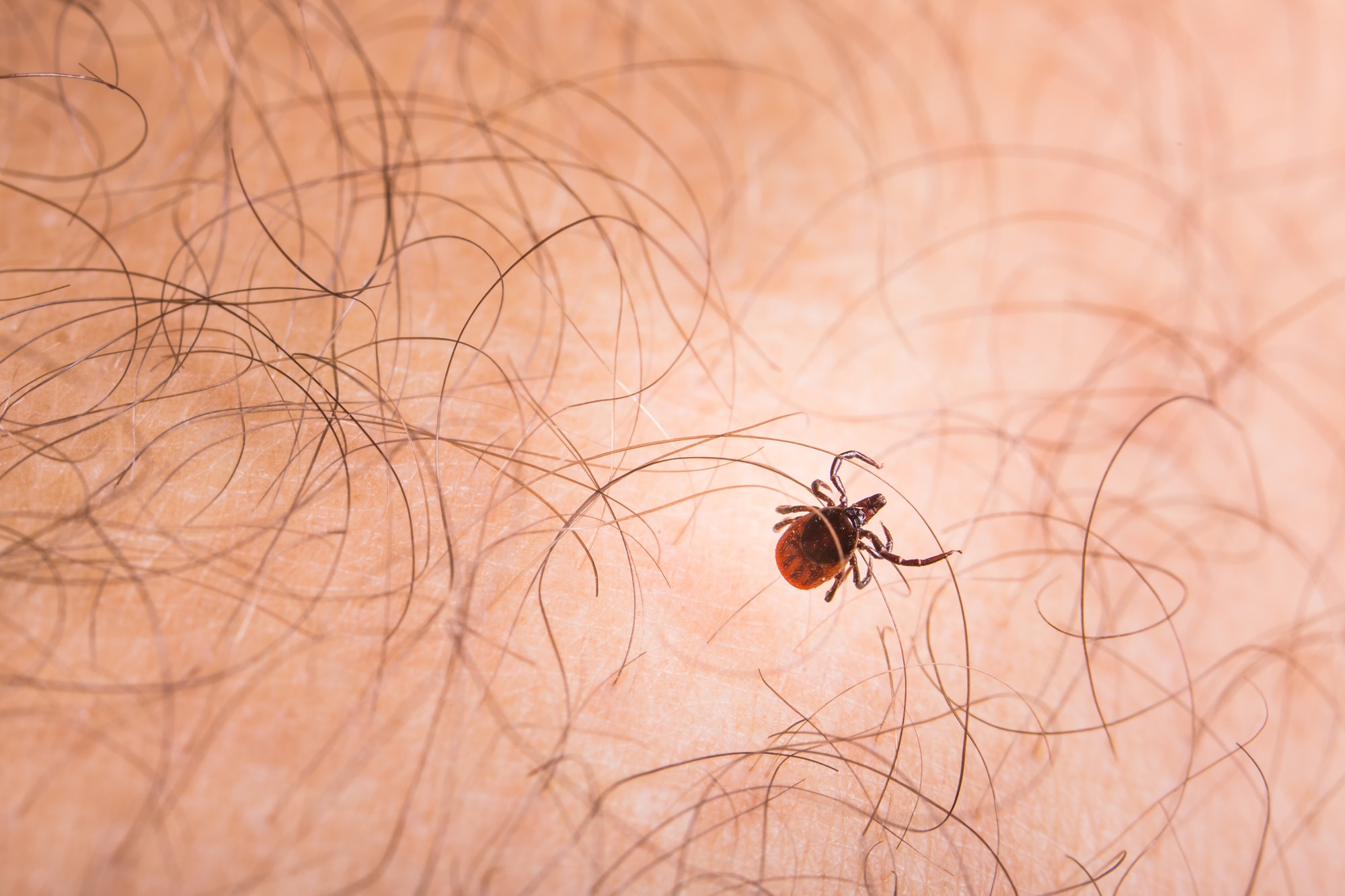
Ticks are most likely to turn up where a yard meets taller, messier habitat: brushy fence lines, wooded edges, tall grass, leaf litter and the routes animals use. The sunny middle of a closely mowed lawn is usually a lower-priority place to look. It is not a force field, though. A deer, dog, rodent or other animal can carry a tick across a tidy yard.
The helpful way to inspect is not to declare the whole backyard tick territory. Start with the transitions between maintained space and cover, then change the spots where people, pets and likely tick habitat overlap.
Where should you look for ticks in a yard?
Start at the edges. The CDC's tick-prevention guidance points to grassy, brushy and wooded areas, especially high grass and leaf litter. The Tennessee Department of Health adds that ticks can be around Tennessee homes when a yard borders brush or has tall grass or accumulated leaves.
Walk the property slowly and note places where cover, shade and animal traffic come together:
- Wooded and brushy edges. Check the strip where lawn meets shrubs, woods or an overgrown neighboring area.
- Leaf litter beneath shrubs. Leaves that collect under low branches or along a fence create more cover than the open lawn beside them.
- Tall grass and weedy fence lines. Pay attention to places your legs, clothing or dog brush against vegetation.
- Paths used by wildlife and pets. A gap under the fence, a route behind the shed or a shaded resting place can bring hosts and ticks through the same small area.
- Woodpiles, old furniture and yard clutter. These can shelter rodents or create protected pockets, especially when surrounded by leaves and brush.
- Play and sitting areas near vegetation. A swing set, patio chair or fire pit at the yard's edge may put people in closer contact with tick habitat than the feature itself suggests.
You are looking for a pattern, not proof from landscaping alone. Leaf litter does not guarantee ticks, and one tick on a dog does not identify the exact spot where it was picked up.
Why are yard edges more important than open lawn?
Ticks need hosts, and their preferred conditions vary by species. Still, brush, grass and low vegetation give many ticks places to wait for an animal or person to pass. Leaf litter and shade can also provide a more protected environment than short, exposed turf.
The University of Minnesota Extension's yard tick guidance recommends focusing maintenance where lawns border brushy or grassy habitat, along paths and in places people use. That is a more useful plan than treating every square foot as equally risky.
Animal movement matters too. Ticks do not set up shop because your mowing schedule slipped by a day. They depend on animals during their life cycle, so a wooded edge with deer traffic or a sheltered rodent route deserves more attention than a random tuft of grass in the middle of the yard.
How can you inspect without turning the yard upside down?
Use a simple map-and-monitor approach:
- Mark the likely edges. Note woods, brush, leaf piles, tall grass, fence lines and shaded routes behind structures.
- Mark where people and pets spend time. Include paths to the shed, play areas, patios, garden beds and the dog's usual route.
- Find the overlaps. A brushy edge no one enters may be a lower practical priority than a leafy path the family uses every afternoon.
- Watch for repeat activity. Record where ticks are found on clothing or pets instead of assuming every discovery came from the same place.
- Check after yard work. After gardening, mowing an overgrown edge or moving brush, check clothing, gear, pets and your body using the CDC's recommended tick-check steps.
Do not handle wildlife, reach blindly into brush or test a suspected area by walking through it bare-legged. The yard does not need a volunteer tribute.
What can you change yourself?
Focus on the places where habitat and household activity meet. Practical steps include:
- Remove accumulated leaf litter from lawn edges, paths and frequently used areas.
- Clear tall grass and brush around the house and along the maintained side of the lawn.
- Mow regularly and trim shrubs where dense growth hangs over walkways or play space.
- Create a roughly 3-foot barrier of wood chips or gravel between lawn and wooded habitat where that layout makes sense.
- Keep play equipment, chairs and other high-use items away from brushy yard edges when practical.
- Stack firewood neatly in a dry area and remove old furniture, mattresses and trash that can shelter animals.
- Discourage wildlife and stray animals without feeding, trapping or handling them yourself.
These changes can reduce contact and make parts of the yard less favorable, but they cannot promise a tick-free property. If you use a pesticide, use only a product labeled for ticks and the exact outdoor site, follow every label direction, and check local guidance. The CDC specifically cautions homeowners not to rely on spraying alone to reduce infection risk.
What should you do after finding a tick?
If a tick is attached to a person, switch from yard detective to bite care. Our guide to tick risks and safe removal explains the CDC removal steps and when symptoms warrant a healthcare call. For pets, ask your veterinarian about suitable prevention and what to do with an attached tick.
If you keep finding ticks, note the dates, the affected people or pets and the parts of the yard used beforehand. That information is more useful during an inspection than a general request to spray everything green.
When is a professional inspection worthwhile?
A closer look makes sense when ticks keep showing up after edge cleanup, a high-use part of the yard directly borders dense habitat, or you cannot tell which areas deserve attention. Thrive's residential pest-control service can help you inspect the evidence and work out a sensible next step. Homeowners east of Nashville can also review our Lebanon pest-control service area.
The short version
Look first where lawn meets brush, woods, tall grass, leaf litter and animal routes. Then concentrate cleanup and monitoring where those conditions overlap with paths, patios, play spaces and pet activity. A maintained open lawn is generally a lower-priority habitat, but no yard feature guarantees that ticks will—or will not—be present.
Frequently asked questions
Can ticks live in short grass?
Short, sunny grass is generally less favorable than tall, brushy or leaf-covered habitat, but ticks can still be carried through maintained lawn by animals. Mowing helps manage habitat; it does not create a tick-proof yard.
Are ticks only found in the woods?
No. Ticks can occur in grassy and brushy places and around homes, especially where yards border woods or contain tall grass and leaf litter. Many people encounter ticks in their own yard or neighborhood.
Should you spray the entire lawn for ticks?
Not as a substitute for inspection and prevention. The CDC says outdoor pesticides can reduce ticks in treated areas but should not be the only protection against infection. Start with habitat edges and human or pet activity, and follow the product label and local guidance for any treatment.
Does finding one tick mean the yard is infested?
No. A single tick may have arrived on a person, pet or wild animal. Record where it was found, check likely edge habitat and watch for a repeat pattern before drawing a bigger conclusion.
Need Pest Control Help?
Call Thrive with the pest, location, and pattern you have noticed. You do not need a perfect identification first.