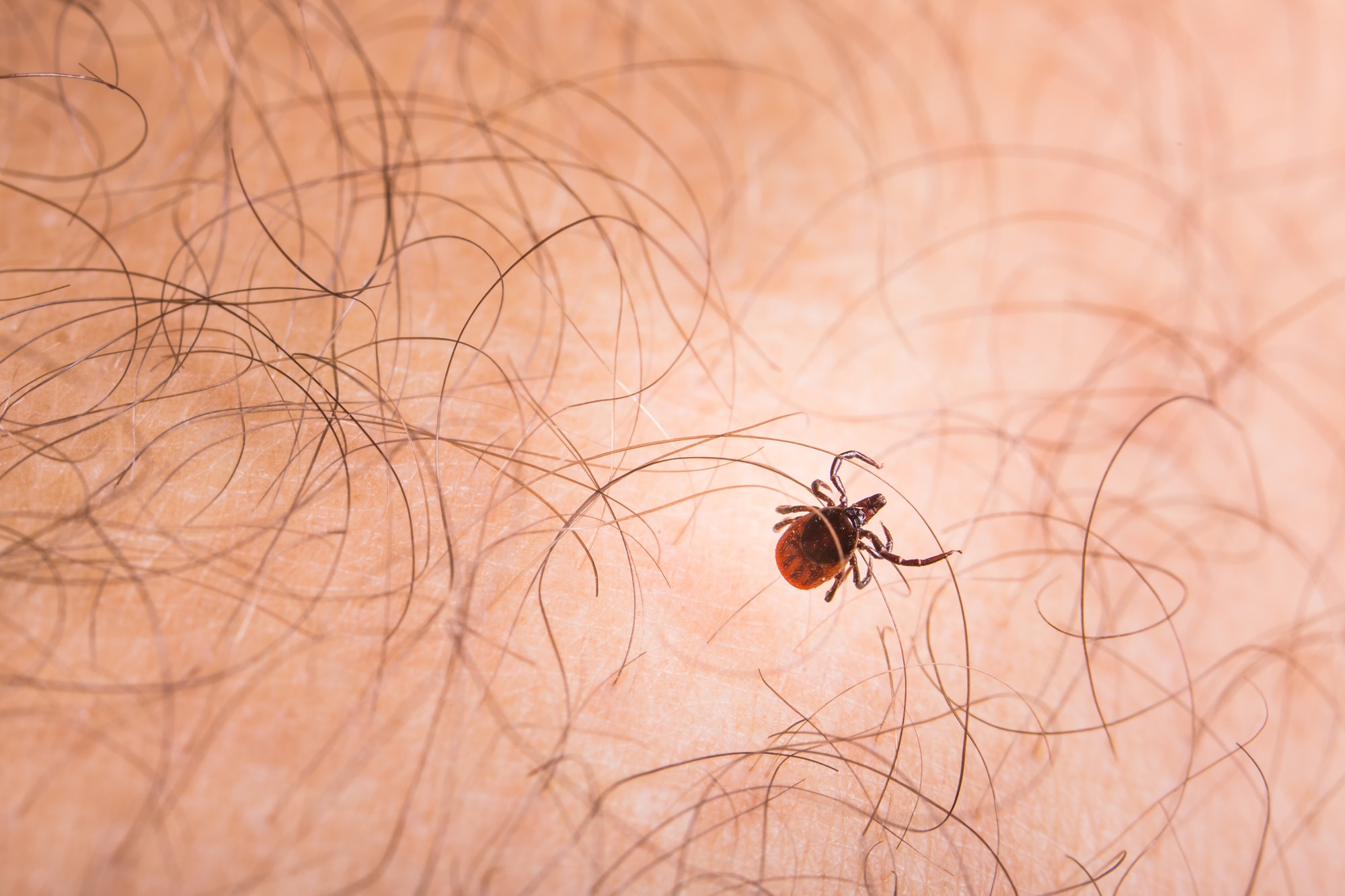
They can be, which is why a tick bite is worth taking seriously without panicking over. Ticks can carry several illnesses in Tennessee, and the Tennessee Department of Health names four it wants residents watching for: Rocky Mountain spotted fever, ehrlichiosis, Lyme disease and alpha-gal syndrome. A bite isn't a diagnosis, though. Removing the tick promptly, noting the date and watching for symptoms over the next few weeks are the practical parts you control.
Here's how to tell the common Tennessee ticks apart, what to do when you find one attached, when to call a doctor, and how to make your yard less friendly to them.
Which ticks are you likely to find in Tennessee?
Three species are worth recognizing for Middle Tennessee homeowners. The CDC's guide to where ticks live covers each one:
- Lone star tick. The adult female has a single white dot on her back, which gives the tick its name. The CDC describes it as a very aggressive biter, with nymphs and adult females biting people most. It's linked to ehrlichiosis, tularemia, Heartland and Bourbon virus disease, STARI (a circular rash) and alpha-gal syndrome, a red-meat allergy.
- American dog tick. Widespread east of the Rocky Mountains. It can spread Rocky Mountain spotted fever and tularemia, and the CDC says bite risk is highest in spring and summer.
- Blacklegged (deer) tick. Found across the eastern U.S. This is the tick behind Lyme disease.
Are orange ticks dangerous?
Color alone won't tell you much. Several ticks can look orange or reddish depending on the species, the life stage and how much blood they've taken in. Ohio State's blacklegged tick fact sheet describes the adult female as a red-orange body around a dark brown shield, roughly the size of a sesame seed. Penn State's lone star tick guide describes that species as dark red. So an orange tick deserves the same care as any other: remove it properly and keep an eye on how you feel.
If you find dozens of tiny ticks at once, those may be larvae, often called seed ticks. Penn State notes that lone star larvae gather in large numbers on vegetation and hosts, which is why they can show up as a cluster on a sock or pant leg.
What to do if a tick is attached
Take it off as soon as you notice it. The CDC's tick removal steps are simple:
- Use clean, fine-tipped tweezers to grasp the tick as close to the skin as you can.
- Pull straight up with steady, even pressure. Don't twist or jerk, and don't squeeze the tick's body.
- Clean the bite and your hands with soap and water, rubbing alcohol or hand sanitizer.
- Get rid of the tick by sealing it in a bag or container, wrapping it tightly in tape, putting it in alcohol or flushing it. Don't crush it with your fingers.
Skip the old tricks. The CDC says not to use petroleum jelly, heat, nail polish or other substances to make a tick let go, because agitating it can push infected fluid into the skin. Jot down the date and where you think you picked the tick up, since your doctor will want both if you get sick later.
When to call a doctor
The CDC says to see a healthcare provider if you develop a rash or fever within several weeks of removing a tick. For ehrlichiosis, the most common concern with lone star ticks, the Tennessee Department of Health says symptoms usually begin within one to two weeks of a bite and can include fever, chills, headache, muscle aches, nausea and sometimes a rash. Tell your provider about the bite, when it happened and where you were. This article isn't medical advice, and if you're worried, a call to your doctor is always reasonable.
How to avoid tick bites in the first place
The CDC's tick bite prevention guidance comes down to a few habits:
- Repellent: use an EPA-registered repellent with DEET, picaridin, IR3535, oil of lemon eucalyptus, para-menthane-diol or 2-undecanone.
- Clothing: treat boots, clothing and gear with products containing 0.5% permethrin. It goes on fabric, not skin.
- Tick checks: after time outside, check under your arms, in and around your ears, in your belly button, behind your knees, in your hair, between your legs and around your waist.
- Shower: showering within two hours of coming inside has been shown to reduce the risk of Lyme disease.
- Dryer: tumble dry clothes on high heat for 10 minutes to kill ticks on dry clothing. Damp clothes need longer.
- Pets and gear: ticks can ride in on dogs, jackets and backpacks and attach to someone later, so check those too. Your veterinarian can recommend tick prevention for your pets.
Making your yard less tick-friendly
Ticks like brushy, grassy, shaded places where they can wait for a host to brush past. The CDC's Lyme disease prevention page recommends:
- Keep the grass mowed, remove leaf litter and clear tall grass and brush.
- Trim tree branches and shrubs to let in more sun. Ticks are less likely to be in bright, sunny areas.
- Put a 3-foot-wide barrier of wood chips or gravel between the lawn and any wooded area.
- Keep playsets, decks and patios away from grassy, brushy or wooded edges.
Wildlife passing through can bring ticks and fleas along with them, even into a yard with no pets. Our article on fleas in a yard without pets covers where to look.
Still finding ticks around the house?
If you've tightened up the yard and you're still pulling ticks off the kids or the dog, it may be time for a closer look at the property. Thrive treats ticks as part of our lawn and yard service and residential pest control, starting with a free inspection for homes around Nashville and Thompson's Station. We can help you work out where they're coming from and what would make the yard less inviting.
Need Pest Control Help?
Call Thrive with the pest, location, and pattern you have noticed. You do not need a perfect identification first.