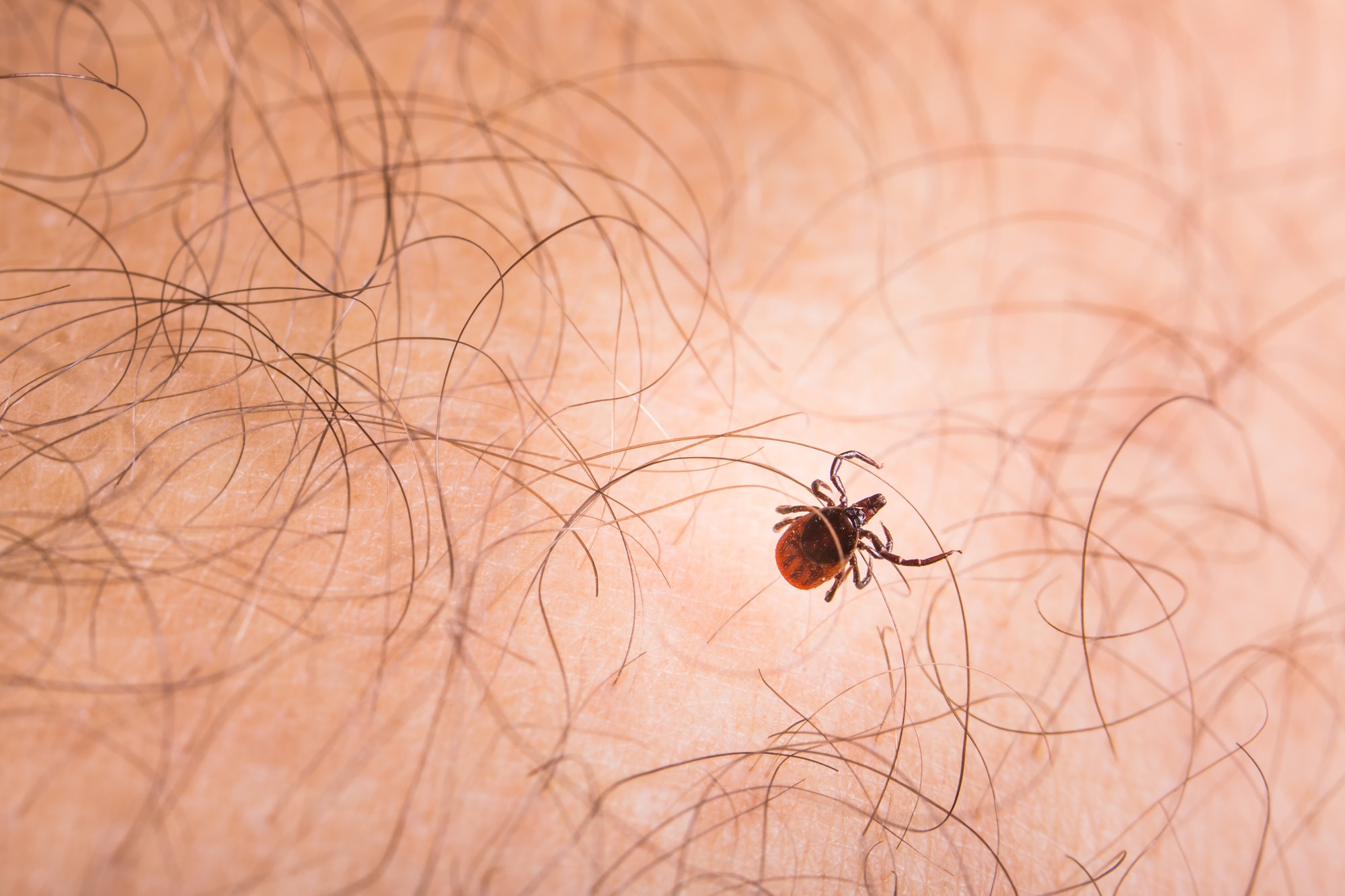
Yes, you can have fleas in your yard even if you do not have pets. Fleas need an animal host, but that host does not have to live with you. A stray cat under the porch, an opossum crossing the fence line, or rodents nesting near a shed can bring fleas into shaded resting spots around the property.
That does not mean every itchy ankle proves your lawn is infested. Start by looking for a pattern: repeat bites or jumping insects in the same part of the yard, especially near places where animals rest. The sunny middle of the lawn is usually less useful than the cool strip under the deck, the edge of a crawl-space opening, or the leaf litter behind the shed.
Where do yard fleas come from when you have no pets?
The CDC explains that wild and stray animals commonly carry fleas. Those animals can pass through briefly and still leave eggs in a protected area where they spend time.
Common visitors include stray cats and dogs, rodents, opossums, raccoons, and other mammals. You may never see the animal itself. Look for the evidence it leaves behind: a path under the fence, nesting material in a shed, disturbed trash, food left outdoors, droppings, or a flattened resting spot beneath a porch.
Fleas do not spread evenly across a yard like grass seed. They tend to build up around host activity and conditions that protect their immature stages. That is why finding the source matters more than treating every square foot.
Why are fleas more likely in shady, damp areas?
Flea development is easier in protected places that stay humid and out of direct sun. The CDC specifically recommends making yards less inviting by mowing, avoiding overwatering, raking debris, and reducing the shelter that rodents and other animals use.
Walk the parts of your yard that combine shade, moisture, and animal traffic:
- Under decks, porches, and outdoor stairs
- Around crawl-space vents or openings
- Beneath shrubs with dense leaf litter
- Near sheds, woodpiles, and stored materials
- Along fence lines used as wildlife paths
- Around outdoor feeding or sleeping areas
- Beside trash, compost, birdseed, or pet food storage
A well-watered flower bed is not automatically a flea nursery, and one wildlife visit does not guarantee a problem. You are looking for several clues lining up in one place.
How can you check the yard without guessing?
Begin with observation before reaching for a pesticide. The EPA’s integrated pest management guidance puts monitoring and correct identification ahead of control. That helps you avoid treating the whole yard for fleas when the real problem is mosquitoes, chiggers, ants, or something indoors.
- Map the activity. Write down where and when bites or suspected fleas appear. A repeatable hotspot is more useful than a general feeling that the backyard is buggy.
- Inspect the sheltered edges. Check shaded animal-resting places, not just the open lawn.
- Look for a host route. Note gaps under fences, access beneath a porch, unsecured trash, spilled birdseed, or outdoor food.
- Save a specimen if possible. A clear photo or captured insect can help prevent a wrong treatment. Do not rely on a skin reaction alone.
- Check inside near the hotspot. If activity is close to a door or crawl space, inspect nearby rugs, upholstered furniture, and floor edges too.
If you borrow a dog for the afternoon and it starts scratching, that is not a diagnostic tool. It is just an awkward visit. Use actual insect evidence and location patterns instead.
What can you do yourself first?
Start by changing the conditions that support the host and the flea habitat. These steps are useful whether you eventually need treatment or not:
- Mow regularly so more soil and groundcover receive sunlight.
- Rake heavy leaf litter and organic debris from shaded resting areas.
- Correct unnecessary overwatering and persistent damp spots.
- Store trash, compost, birdseed, and any animal food in tightly closed containers.
- Remove cluttered firewood, brush, and junk that can shelter rodents near the house.
- Seal rodent entry gaps in the building after confirming no animal is trapped inside.
- Discourage stray and wild animals without handling, trapping, or feeding them.
These are not instant fixes for every established flea problem. Fleas have multiple life stages, and the visible adults are only part of what may be present. Still, removing the host attraction and cleaning up the hotspot keeps you from treating the symptom while leaving the cause in place.
Should you spray the whole lawn for fleas?
Usually, no—not as a first move. A broad application can miss the sheltered hotspot while treating open lawn that is not supporting flea activity. It can also expose people, pollinators, pets, and other organisms unnecessarily.
If you use any pesticide, use only a product whose label allows the exact outdoor site and pest, and follow the label for application, protective equipment, reentry, pets, weather, and watering. More product is not a better shortcut. The EPA’s IPM approach favors targeted, lower-risk controls after the pest and action area are identified.
When the source is an animal resting area, control may need to address both the flea habitat and the reason animals keep using that spot. If an animal is still using that spot, it may need to be discouraged or kept out before flea control can hold.
How long should you monitor after cleanup?
Keep checking the same marked hotspots rather than moving the goalposts around the yard. Improvement looks like fewer sightings or bites in those repeat locations and no new activity spreading toward the house. Because immature fleas can continue developing after the original host is gone, one quiet afternoon is not enough to prove the issue is over.
If activity continues, preserve a specimen and note the exact places where it appears. Those details make an inspection more useful and help separate a flea problem from another biting or jumping insect.
When is a professional inspection worthwhile?
A closer look makes sense when you repeatedly find fleas in the same outdoor area, activity has moved indoors, cleanup has not changed the pattern, or you cannot identify the host or hotspot. An inspection should focus on the evidence and the affected places—not automatically turn into a spray-everything plan.
Thrive’s residential pest-control guide explains how inspection and prevention fit into a broader home plan. If you are in Rutherford County, you can also review our Murfreesboro pest-control service. When you are ready, contact Thrive and tell us where you found the activity, what you have already changed, and whether wildlife or stray animals have been using the area.
The short version
A pet-free yard can still have fleas when wild or stray animals use a shady, humid resting spot. Inspect the places where animal traffic, moisture, and shelter overlap. Remove food and harborage, clean up the hotspot, monitor the same locations, and identify the insect before choosing treatment. If the pattern keeps returning or reaches the house, an evidence-led inspection is the sensible next step.
Frequently asked questions
Can fleas live in grass?
Fleas can occur in a yard, but they are more likely to persist in shaded, humid, protected areas used by an animal host than in hot, exposed open grass.
What animals bring fleas into a yard?
Wild and stray mammals can carry fleas, including rodents, opossums, raccoons, cats, and dogs. The useful question is which animal is regularly resting or nesting near the hotspot.
Do flea bites prove the yard has fleas?
No. Skin reactions overlap with other biting pests. Look for a jumping insect, repeat activity in the same place, or another piece of physical evidence before treating.
Will mowing get rid of fleas?
Mowing can make parts of the yard less sheltered and expose more ground to sunlight, but it may not resolve an established hotspot by itself. Combine it with debris removal, moisture correction, host exclusion, and monitoring.
Need Pest Control Help?
Call Thrive with the pest, location, and pattern you have noticed. You do not need a perfect identification first.