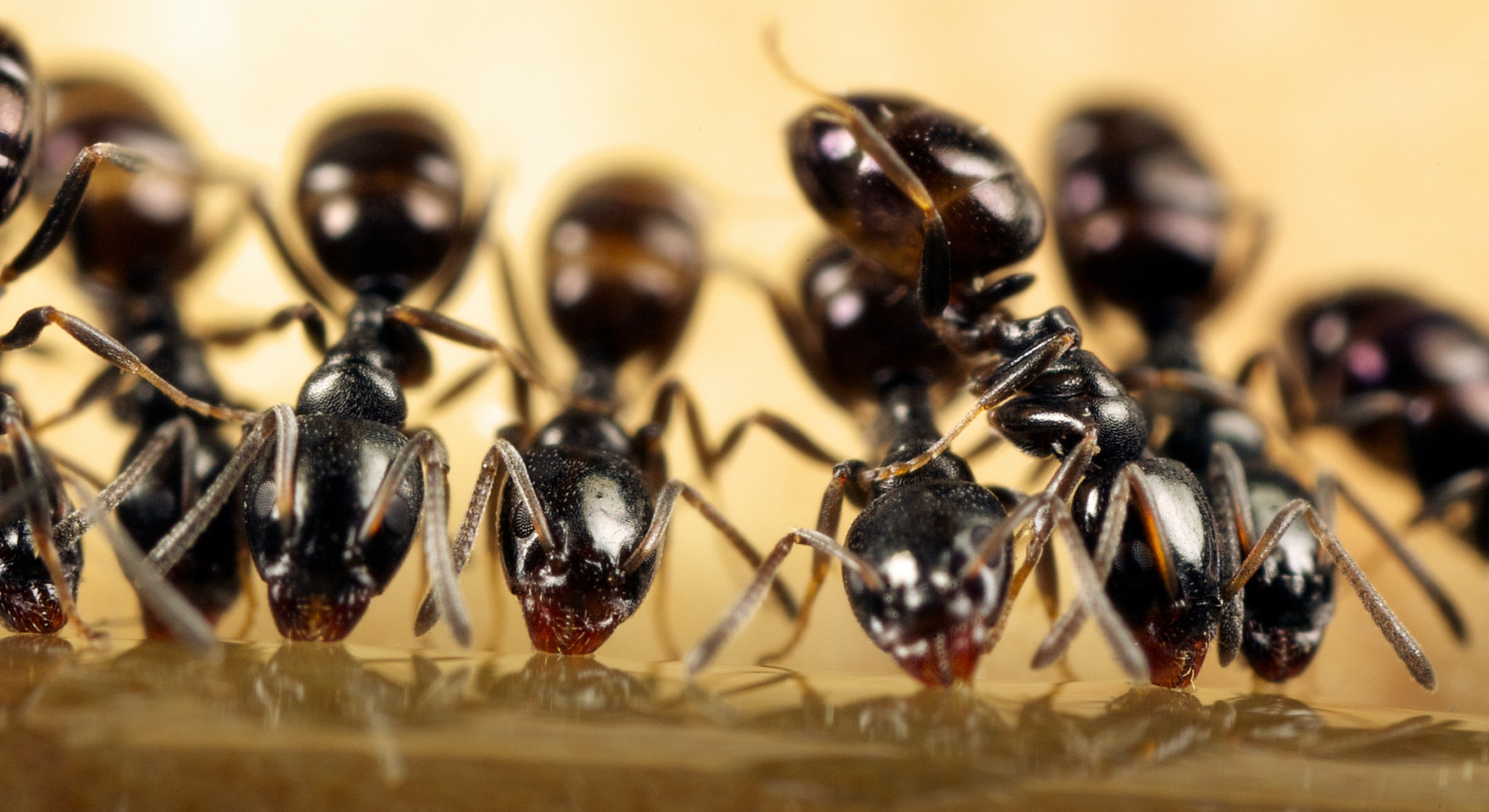
You wipe down the counters, take out the trash, and keep the kitchen clean. And the next morning, there's a line of ants marching from the window to the fruit bowl. You wipe them up. They come back. You spray. They find a different route.
Sound familiar? Here's how to stop the cycle.
Why Do Ants Keep Coming Back to Your Kitchen?
The reason ants seem impossible to eliminate is that what you see on your counter is just the tip of the iceberg. The colony is somewhere else entirely — outside in the soil, inside your walls, or under your foundation slab. The ants in your kitchen are workers, and they're following invisible chemical highways.
When a scout ant finds food in your kitchen, it lays down a pheromone trail on its way back to the colony. Other workers follow that trail, reinforcing it with more pheromones as they go. Wiping the ants away with a wet cloth doesn't fully eliminate the trail. The chemical signal persists, and within hours, new workers are following the same path.
Even tiny crumbs are worth the trip. Ants can detect food from yards away, and a single grain of sugar is a significant find for a colony of thousands.
Moisture matters too. Many ant species are attracted to water as much as food. A dripping faucet or wet sponge left on the counter can be enough to draw them in.
What Kind of Ants Are in Your Kitchen?
Identifying the species tells you how serious the problem is and what treatment approach will work.
Odorous house ants are the most common kitchen invaders. They're tiny (about 1/8 inch), dark brown or black, and they emit a rotten coconut smell when crushed. They form large colonies and are persistent foragers.
Carpenter ants are larger — up to half an inch — and usually black. If you're seeing large black ants in your kitchen, they could be carpenter ants, which cause structural damage by excavating wood for nesting. A carpenter ant exterminator should inspect your home if you suspect this species.
Pharaoh ants are tiny, yellowish, and extremely difficult to treat. They're notorious for "budding" — when disturbed, they split into multiple colonies, making the problem worse. Professional bait treatment is the only effective approach for pharaoh ants.
Fire ants rarely invade kitchens, but they can show up near sliding glass doors and exterior walls, especially in ground-floor apartments and homes with slab foundations.
You might also encounter velvet ants in your yard, though these are actually wasps and won't typically enter your kitchen.
How to Find Where Ants Are Getting In
Before you can stop ants, you need to know where they're entering. This takes a few minutes of observation.
Follow the ant trail backward from the food source. The ants are walking in a line for a reason — that line leads to their entry point. Trace it patiently. It usually ends at a crack along a window frame, a gap where the countertop meets the wall, a pipe penetration under the sink, or a crack in the foundation.
Common entry points in kitchens include window frames, door thresholds, pipe penetrations under sinks and dishwashers, and cracks in the slab or foundation. Check behind the dishwasher and refrigerator — these warm, moisture-rich areas are common ant highways.
How to Get Rid of Kitchen Ants (Step by Step)
Step 1: Clean the pheromone trail. Use a solution of equal parts water and white vinegar to wipe down the entire trail path. Vinegar disrupts the pheromone signal. You can learn more about this approach in our article on how to get rid of ants with vinegar.
Step 2: Find and seal the entry point. Once you've traced the trail to its origin, seal the gap with silicone caulk. This forces the ants to find a new route, which buys you time.
Step 3: Remove all food sources. Deep clean behind appliances, wipe out cabinets, and store all open food in airtight containers. Don't forget pet food bowls, fruit on the counter, and crumbs in the toaster tray.
Step 4: Use bait stations — NOT spray. This is critical. Spraying kills the ants you can see, but it also scatters the colony and can trigger budding in some species, creating multiple new colonies. Bait works differently. Workers carry the bait back to the colony, where it's shared with other workers, larvae, and eventually the queen.
Step 5: Place bait near the entry point, not on the trail itself. You want the ants to find the bait on their way into your kitchen, pick it up, and carry it back. If you place bait in the middle of the trail, they may bypass it.
Step 6: Wait 3 to 7 days. Bait takes time to work its way through the colony. You may actually see more ants initially as workers recruit others to the bait source. That's a good sign — it means the bait is being taken back to the nest.
Why DIY Ant Treatment Often Fails
The most common mistake homeowners make is spraying ants with contact killer. It feels satisfying to watch them die on the spot, but it's counterproductive.
Spray kills the visible workers but doesn't reach the colony. In species with multiple queens, spraying can trigger the colony to split into two or more satellite colonies — a process called budding. Now you have multiple colonies instead of one.
Carpenter ants present a different challenge. Their nests are typically inside wall voids or structural wood, and reaching the nest requires professional equipment and knowledge.
In our experience treating Nashville-area homes, most recurring ant problems come from colonies nesting in wall voids or under concrete slabs. Surface-level DIY treatments simply can't reach these locations. Check out more about the ant problems Nashville homeowners face.
Professional Ant Treatment: What to Expect
When you call a professional, here's what the process typically looks like.
First, we inspect to identify the species and locate the colony. Species identification is essential because different species require different baits and treatment approaches.
Next, we place targeted bait in strategic locations. The bait is species-specific — what works for odorous house ants won't work for carpenter ants. Proper bait selection is one of the biggest advantages of professional treatment.
We also apply an exterior perimeter treatment that creates a barrier around your home's foundation. This intercepts foraging ants before they reach your kitchen.
Finally, we schedule a follow-up inspection to verify that the colony has been eliminated and no new trails are forming.
Thrive provides ant removal across Nashville, Brentwood, Franklin, Hendersonville, and the entire Middle Tennessee area. If ants keep coming back to your kitchen despite your best efforts, give us a call.
Frequently Asked Questions
Do ants go away on their own in winter?
Some outdoor ant species reduce activity in winter, but ants nesting inside your home remain active year-round. Interior wall voids and spaces under slabs stay warm enough for ant colonies to thrive even in January. If you're seeing ants in winter, the nest is almost certainly inside your home's structure.
Are ants in the kitchen dangerous?
Most kitchen ants are nuisance pests and don't bite or spread disease. The exception is carpenter ants, which can cause structural damage over time. Any ant species can contaminate food, so it's worth addressing the problem even if the ants themselves aren't dangerous.
Can ants damage my house?
Carpenter ants can. They excavate wood to create nesting galleries, and over time this weakens structural members. Other common kitchen ants don't damage structures, but they can nest inside wall voids and be extremely difficult to eliminate without professional treatment.
Need help beyond the article?
If the signs around your property match what you are reading, you can review the related service or call Thrive with the details you have.